What usually creates the portal need
The portal need usually starts when the same status questions, document requests and approval checks are being answered manually across email, chat and calls.
We build client portals for Dubai businesses that need more than a login screen. From status dashboards and document approvals to service requests, bilingual EN + AR access and operational visibility, we design portal systems that reduce friction for both clients and internal teams.
The portal need usually starts when the same status questions, document requests and approval checks are being answered manually across email, chat and calls.
Most clients do not want a complex dashboard. They want clarity: what is happening now, what they need to do next, what documents are missing and who is handling the account.
Hours disappear when the same progress questions, file requests and approval checks are answered manually across multiple channels instead of one visible portal flow.
A clear portal experience makes the business feel more organized, more premium and easier to work with, especially when projects or ongoing services involve many moving parts and Arabic- plus English-speaking clients.
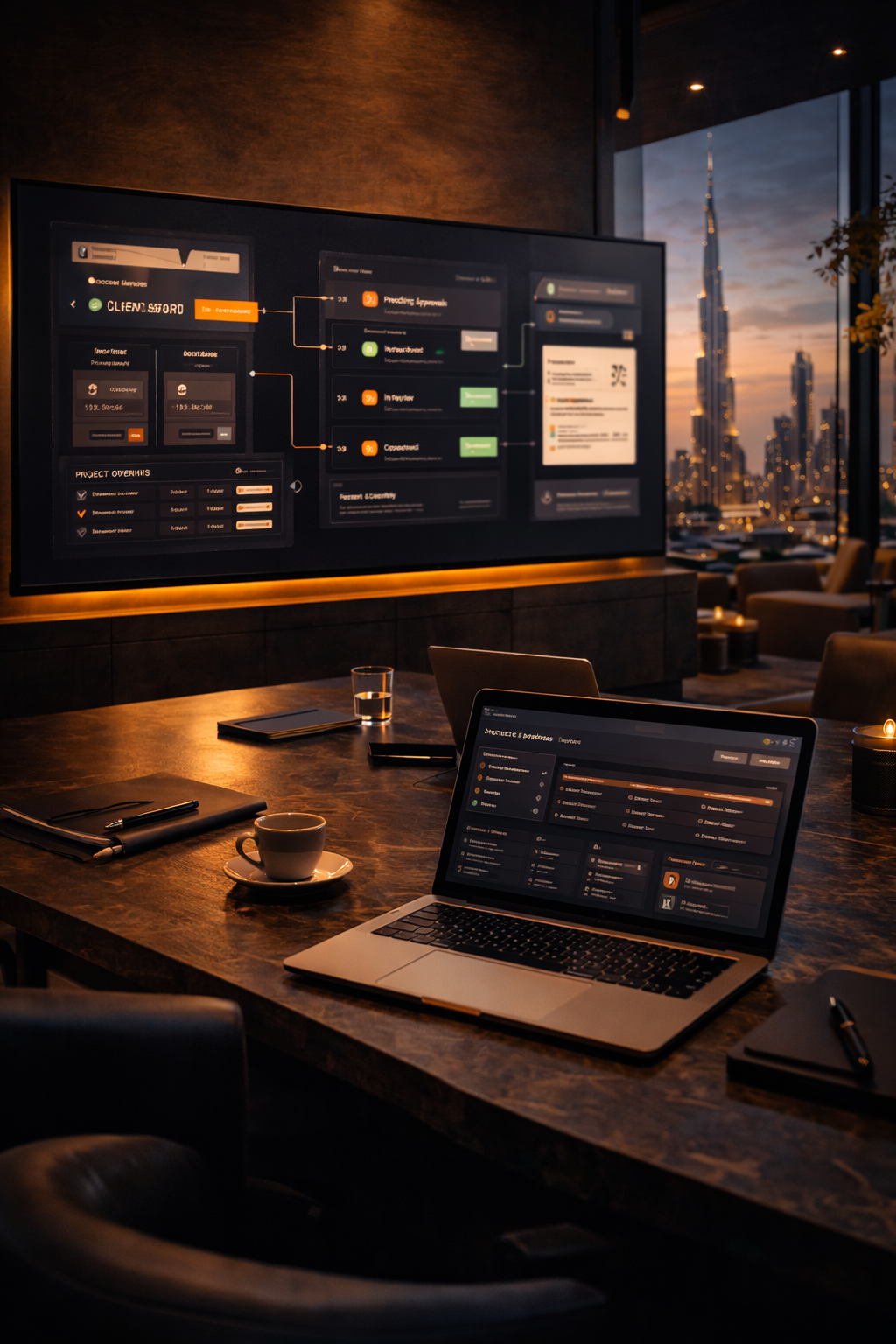
We design portals around the real service flow between the business and the client, not around a generic dashboard template. In practice that means client dashboards, structured requests, document handling, approvals, bilingual EN + AR access and self-service connected to the wider CRM and automation system and the broader website experience.
We build client-facing areas where project status, milestones, documents and next steps stay visible without forcing teams to repeat the same updates across email, calls and WhatsApp.
Talk about your portalPortals can support uploads, approvals, confirmations and structured handoff logic so client actions move into the business cleanly instead of disappearing into inboxes or chat threads.
Talk about your portalNew requests should move to the right owner, trigger the right internal action and stay visible to both the client and the team from the moment they are submitted.
Talk about your portalWe focus on actions that reduce repetitive support work: checking status, submitting documents, approving next steps or accessing service history.
Talk about your portalA strong portal should connect to the internal process behind it, whether that means CRM, task flow, onboarding stages or delivery visibility.
Talk about your portalFor Dubai businesses serving mixed audiences, the portal structure can support both English and Arabic communication, updates and requests without making the experience feel fragmented.
Talk about your portal
Many businesses ask for a portal when email, WhatsApp and calls are creating operational drag. Clients ask for updates repeatedly. Documents are scattered. Approvals are slow. Teams spend time repeating information instead of moving work forward. In bilingual businesses, English and Arabic-speaking clients also end up receiving different levels of clarity depending on who answers manually.
A strong client portal should reduce that friction, but only in the places where self-service actually helps. Good portal work is usually not about adding more dashboard widgets. It is about deciding what the client should see, what the client should approve, what the client should upload and what should still stay with a real person inside the team.
Clients can check what matters without repeatedly asking the team for updates.
The service feels more structured, easier to follow and more credible from the client side.
Requests, approvals and updates move with better visibility across teams instead of getting lost between personal inboxes.
The business can support more accounts, projects or requests without multiplying coordination overhead.
We start from the client journey and the internal workflow that must support it after login. That means understanding where repeated status questions, document exchange, approvals and service requests create friction, where bilingual client communication starts breaking down, and which actions should actually become self-service. In many cases, the most useful portal is not the one with the most features, but the one that removes the most repetitive client-team back-and-forth.
We identify where client visibility, repeated updates, document exchange, approvals or service requests currently create friction and whether a portal is the right answer or whether the problem actually sits elsewhere in the workflow.
We define user roles, permissions, stages, notifications and the portal actions that actually matter to the client and the internal team, instead of copying a generic dashboard model with unnecessary screens.
We shape the interface, page flow and operational logic around real service use instead of around a generic dashboard template.
We build the portal, connect it to internal workflows where needed and refine it around real usage from both client and team sides.
No. Many small and mid-sized service businesses benefit quickly when client communication, status, approvals and requests become more structured.
Yes. That is one of the most common and most useful portal scenarios, especially where files, confirmations or review steps slow the business down.
Not always. The goal is to reduce unnecessary email and make important actions, requests, approvals and visibility more structured.
Yes. A strong portal often works best when client-facing visibility connects to the internal workflow behind it, including CRM, onboarding or approval flow.
Yes. In many cases we can improve structure, usability, visibility and workflow fit without replacing the whole system.
A portal should not try to replace every human interaction. It should remove repetitive status checks, approvals and document handling where self-service helps, while keeping higher-value conversations with the team where trust still matters.
Yes. Where the business needs it, we can plan portals so English and Arabic-speaking clients receive a cleaner, more consistent path for updates, requests and approvals.
Yes. A clear portal often makes the business feel more premium, more organized and more reliable, not just more efficient internally.
We help businesses build portals that reduce repetitive communication, improve visibility and create a clearer client-facing service system, so approvals, document exchange and service requests stop relying on manual coordination behind the scenes.