Direct booking in Dubai hospitality rarely fails because the hotel lacks appeal. More often, it fails because the website does not move the guest cleanly from interest to action. A premium property may have strong photography, a polished brand and a solid reputation, yet still lose bookings because the path from page view to enquiry, reservation or confirmation is too weak. In that situation the business ends up leaning harder on OTA traffic, not because OTA is strategically ideal, but because the direct route is doing less work than it should.
That matters even more in Dubai because guest behavior is fast and comparison-heavy. A visitor can look at several hotels, restaurants, beach clubs or experiences in one session, jump between mobile tabs, ask questions on WhatsApp and choose the option that feels easiest to understand and book. If your site introduces friction at that point, the guest does not pause to appreciate the brand effort. They move.
Why direct booking usually underperforms
Many hospitality sites still behave like digital brochures instead of booking systems. They present the property well, but they do not clarify what the guest should do next. Stay, dining, events, spa and concierge intent are mixed together. Landing pages feel too general. Mobile prompts are weak. A user who wants one specific action has to interpret the site instead of being guided by it.
This gets worse when post-enquiry follow-up is slow. Even if the user completes a form or opens a conversation, weak confirmation flow can still break trust. In hospitality, speed after intent is almost as important as the page itself. A direct booking website is not only about attracting the guest. It has to support the handoff into reservation, concierge or guest-services operations without delay.
What usually weakens direct booking first
The first issues are usually easy to identify. Generic landing pages make different guest intents compete on the same screen. Weak mobile booking prompts bury the next action below visual polish. Dining, stay and experience journeys often become fragmented, so the guest is never sure which path applies to them. And once an enquiry is sent, slow confirmation or unclear follow-up creates hesitation at exactly the moment when another property is one tap away.
Those weaknesses are not cosmetic. They directly shape how much of your demand stays with your brand versus leaking back to aggregator platforms or competing properties.
What weakens direct booking most often
The first problems usually look familiar: generic landing pages, weak mobile booking prompts, fragmented stay, dining and concierge journeys, and slow confirmation after enquiry. When those issues appear together, the site stops behaving like a booking engine and starts behaving like a brochure that sends too much value back to OTA channels.
What a stronger direct-booking setup actually does
A better hospitality website does not just look more premium. It reduces decision friction. It pushes the guest toward the right action quickly, separates stay, dining and experience intent, supports follow-up through the channels people actually use, and gives the internal team cleaner visibility over what happens after the enquiry arrives.
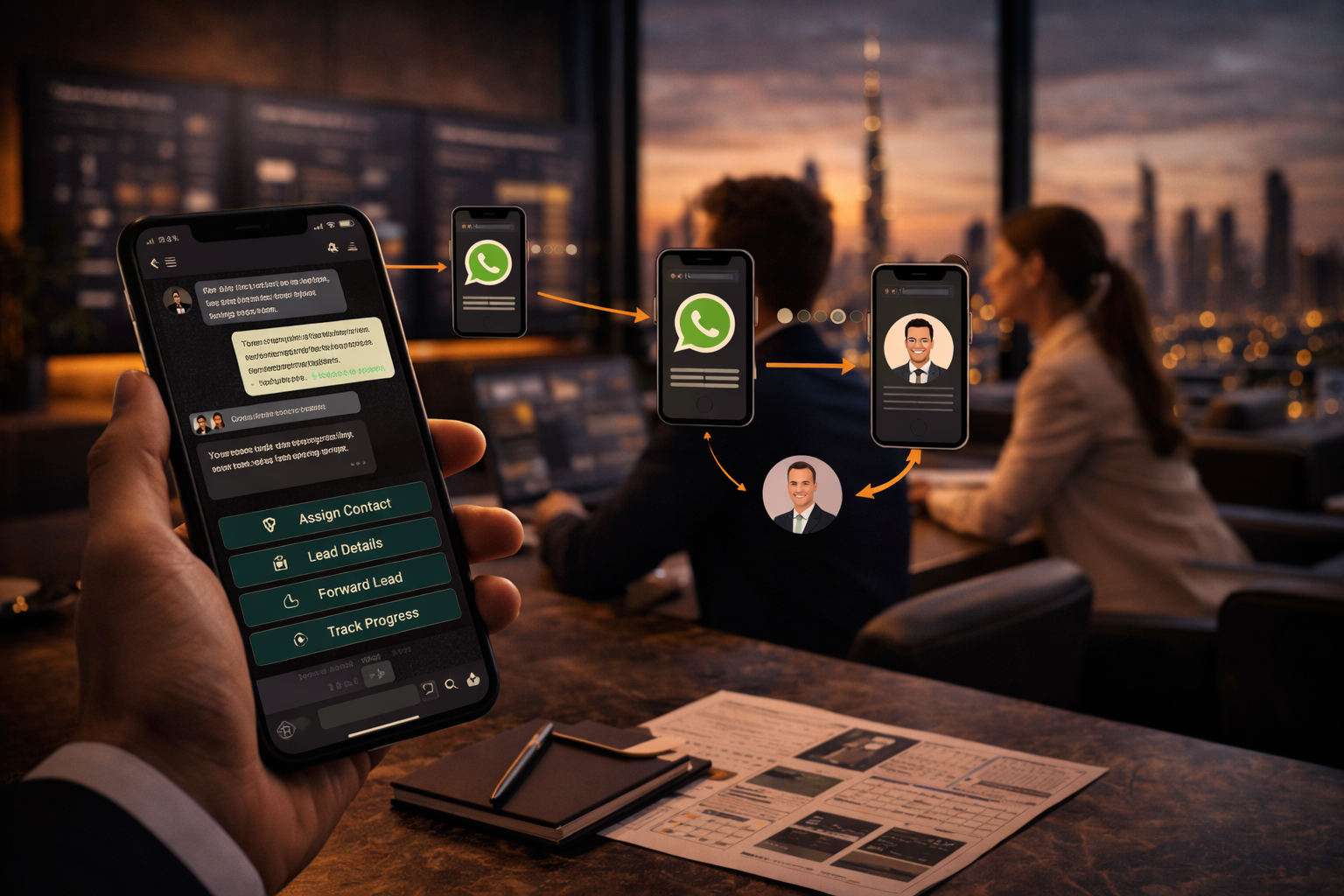
In Dubai, WhatsApp often becomes part of that path whether the team planned for it or not. A guest may browse rooms on mobile, ask a question through WhatsApp, request a dining reservation, or confirm a concierge need there instead of through a traditional form. That means the website and the follow-up path should be designed as one system, not as disconnected layers.
The strongest direct-booking setups also understand that not all guest intent is equal. Someone browsing a room category is not in the same decision state as someone requesting an event package or same-week dining reservation. If the site routes both users through the same generic process, conversion usually suffers.
What a better website should do
A stronger setup should push guests toward the right action quickly, separate stay, dining and experience intent, support WhatsApp follow-up where it fits the guest journey, and give the team cleaner operational visibility after the enquiry arrives. That is usually where direct booking starts working like a revenue system instead of a design layer.
Why Dubai hospitality needs cleaner intent paths
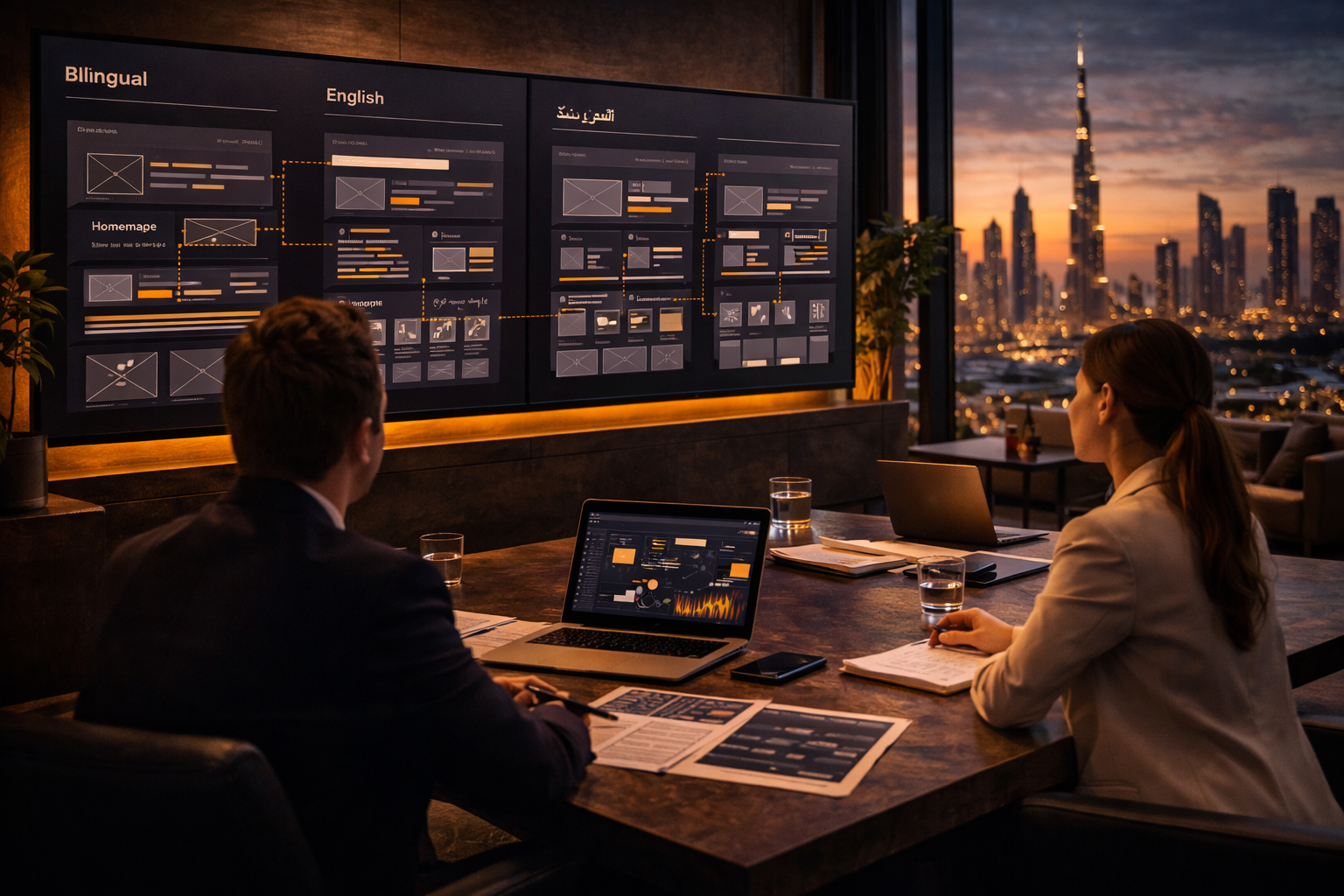
Dubai guests often compare premium options quickly and expect clarity from the first interaction. They may be traveling internationally, booking from mobile, asking outside local business hours or moving between several hospitality brands in parallel. That makes intent separation especially important. A room enquiry, a concierge request, a dining reservation and a spa booking should not feel like variations of the same form. They should feel like different paths built for different decisions.
That is also where direct booking starts to outperform simple brand presence. Once the guest feels that the business understands the specific action they want to take, trust rises. When the path stays vague, OTA or another brand becomes the safer option.
What strong Dubai direct booking usually includes
The best setups are usually structured around a few practical layers. One is a clearer split between guest intents such as stay, dining, events, spa or concierge. Another is a stronger mobile-first booking path where the next action is visible without friction. A third is faster follow-up logic after enquiry, whether through email, booking system confirmation or WhatsApp handoff. And just as important, the team needs operational visibility so that enquiries do not disappear into a general inbox.
For hospitality groups with multiple offers, dedicated landing pages often matter more than one polished homepage. A guest arriving from search or paid traffic should land inside the exact path that matches their goal, not on a broad brand overview that forces another round of navigation.
Practical priority
The most practical starting move is to tighten one high-value guest path first. In most hospitality businesses that means room enquiry, concierge request, event booking, or spa and dining conversion. Fixing one path well usually creates a better base for wider optimization than trying to rebuild every journey at the same time.
Start with one high-value booking path
The strongest direct-booking improvements usually begin with one high-value path, not a full-site rebuild. That might be room enquiries, concierge requests, event bookings, spa reservations or dining conversion. The point is to choose one intent stream where demand already exists, friction is visible and follow-up can be measured.
Once that path is cleaned up, the hospitality brand can see where guests hesitate, how quickly the team responds and whether direct conversion improves when the booking journey is simplified. That usually creates a better base for the next layer than trying to redesign every guest path at once.
Hospitality in Dubai does not win direct booking by looking premium alone. It wins when the website makes the right action easy, confirms intent quickly and supports the operational handoff behind the scenes. That is what turns a branded website into a real booking asset instead of a nice front door that still sends too much value back to OTA channels.